Control Systems / PA systems

PA Systems for Businesses, Factories and Educational Institutions

PA system installation for everyday use and emergencies — loudspeakers, horn speakers, amplifiers, audio zones and paging stations, up to emergency PA under SI 1220 Part 3.

From a local system to a multi-zone setup

Design, equipment and installation of PA systems.

01

Specification and audio zones

Mapping the playback zones, operating needs, background noise levels and the routine and emergency messages required.

02

Loudspeakers and horn speakers

Matching recessed loudspeakers, wall loudspeakers, half-moon loudspeakers and horn speakers to the type of environment and the coverage required.

03

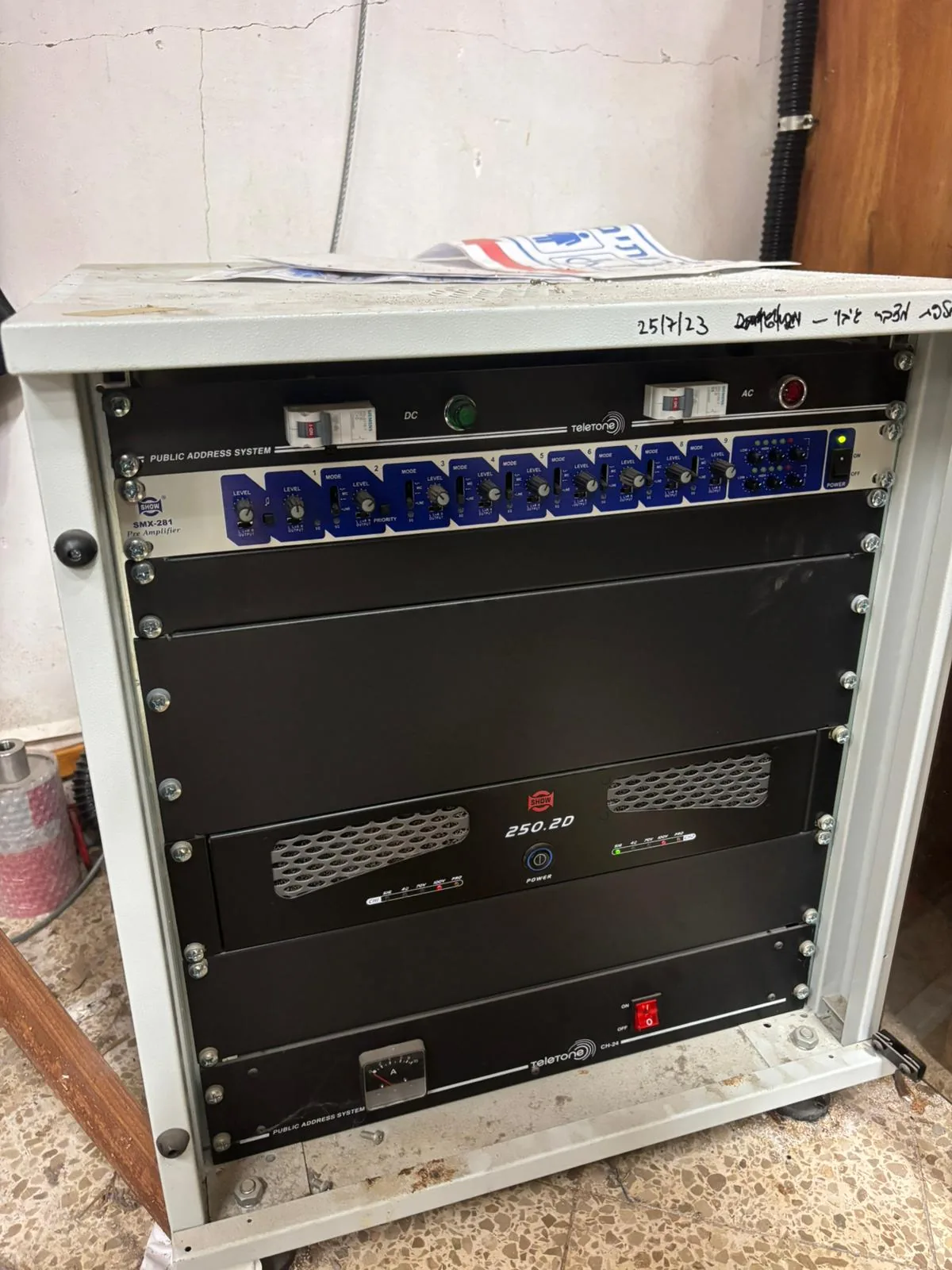
Amplifiers and line monitoring

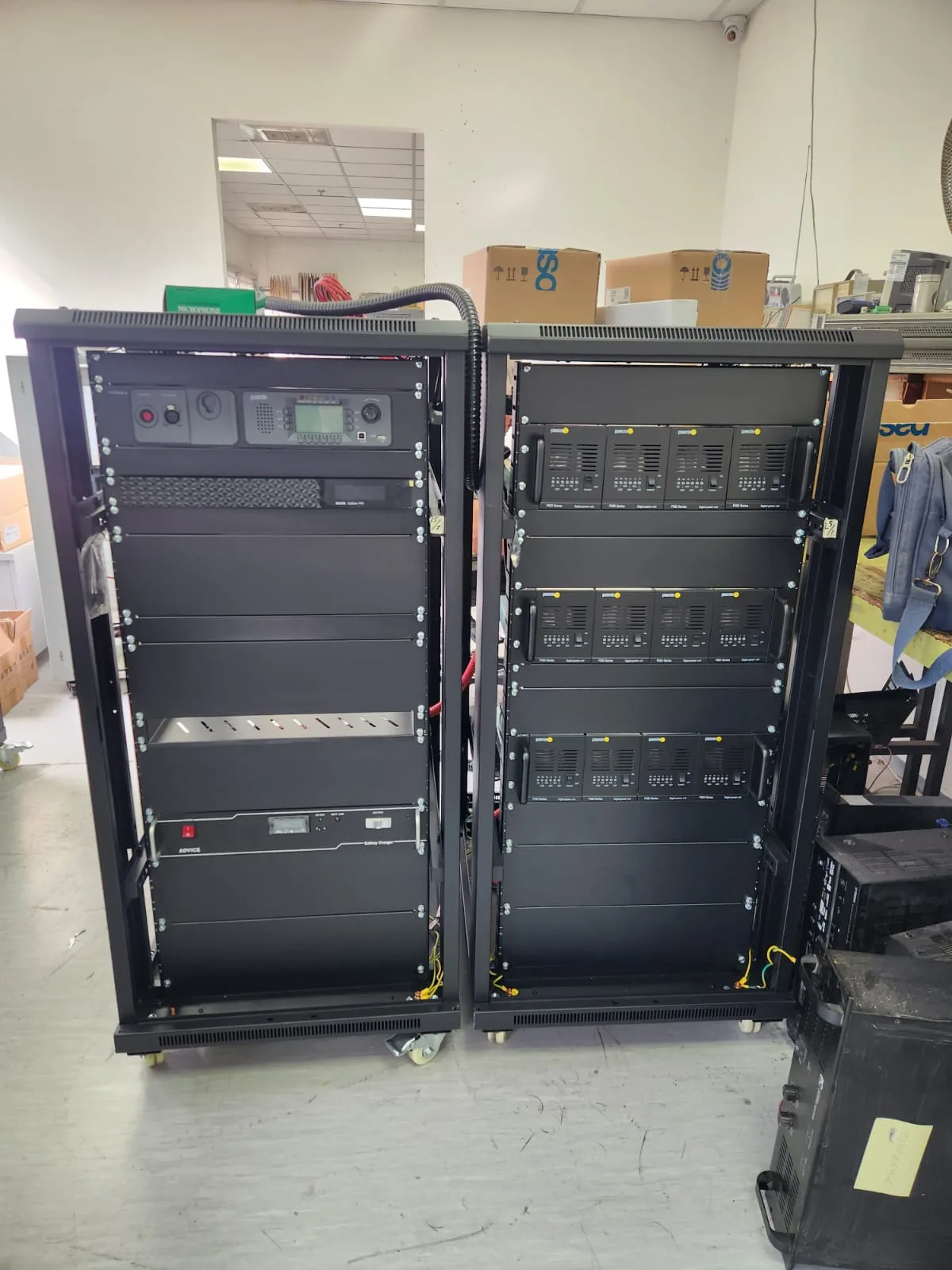
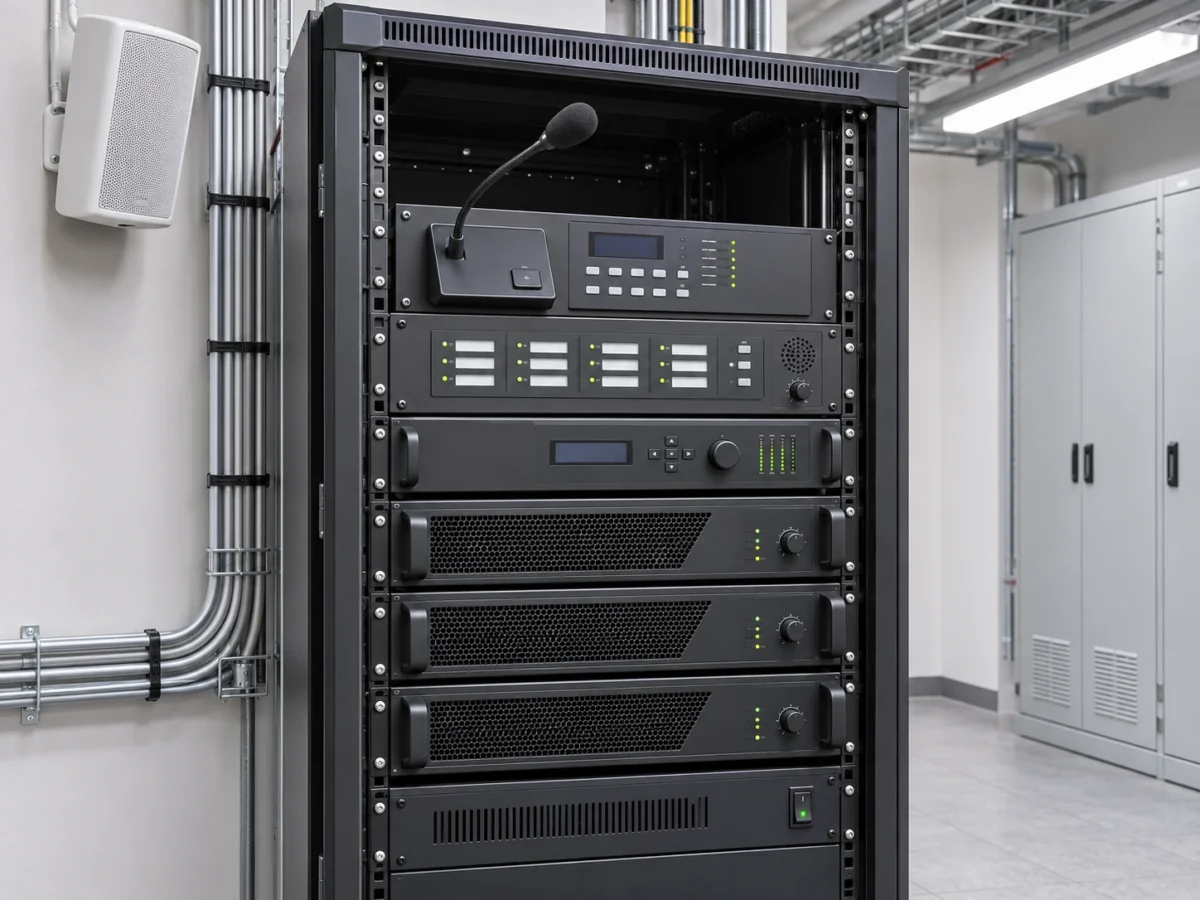
Choosing amplifiers, controllers and amplification equipment according to the system's scope, the loudspeaker power and the operating specification.

04

Paging stations and microphones

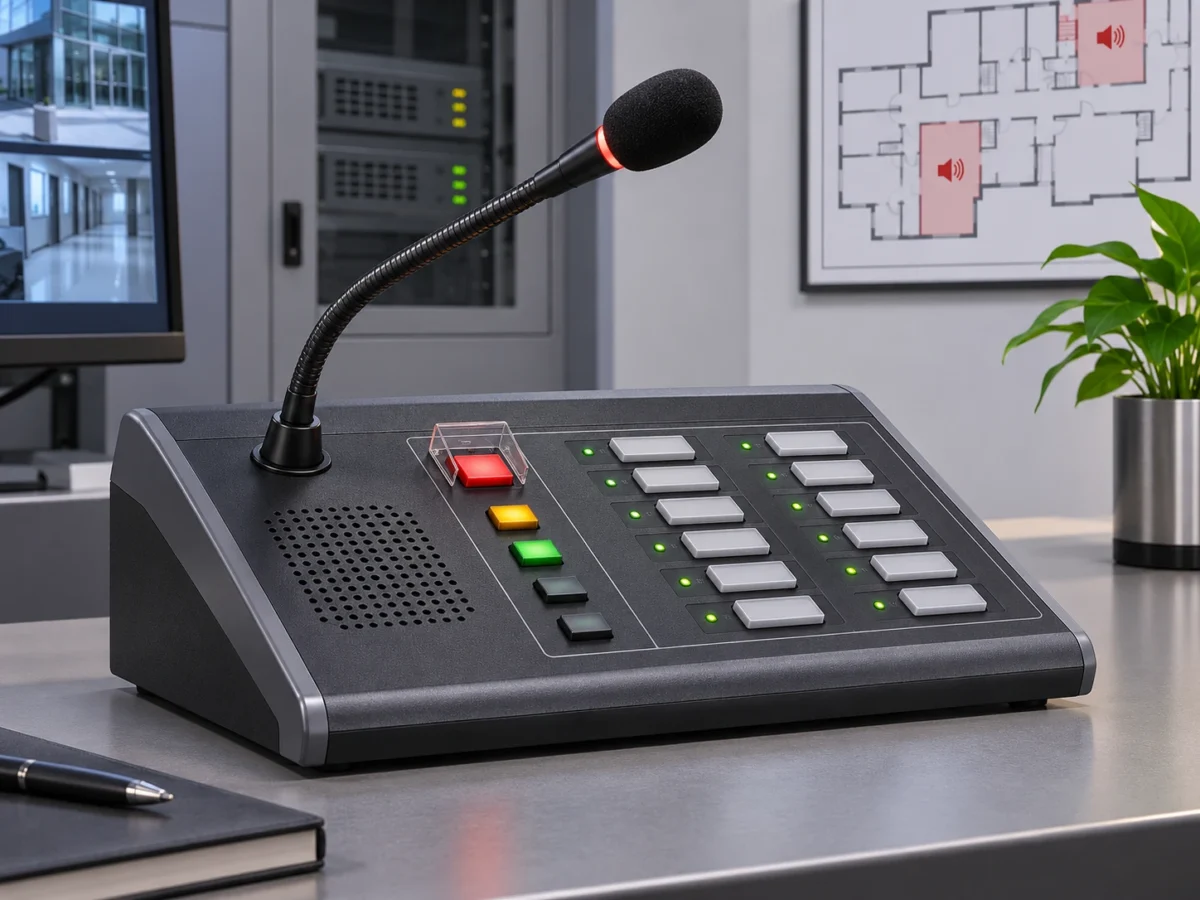
Installing microphones, paging stations and control interfaces for local or zone-based announcements.

05

Emergency PA and interfaces

In emergency systems: reviewing evacuation scenarios, recorded messages, backup power and interfaces to fire detection according to the applicable requirements.

06

Testing, handover and maintenance

Adjusting volumes, checking coverage and clarity, testing activation scenarios and training for everyday use of the system.

Everyday use and safety — two purposes

Operational PA and emergency PA are not the same system.

We separate the everyday management of people and spaces from systems whose role is to deliver alerts and instructions in an emergency — from the specification and equipment stage onward.

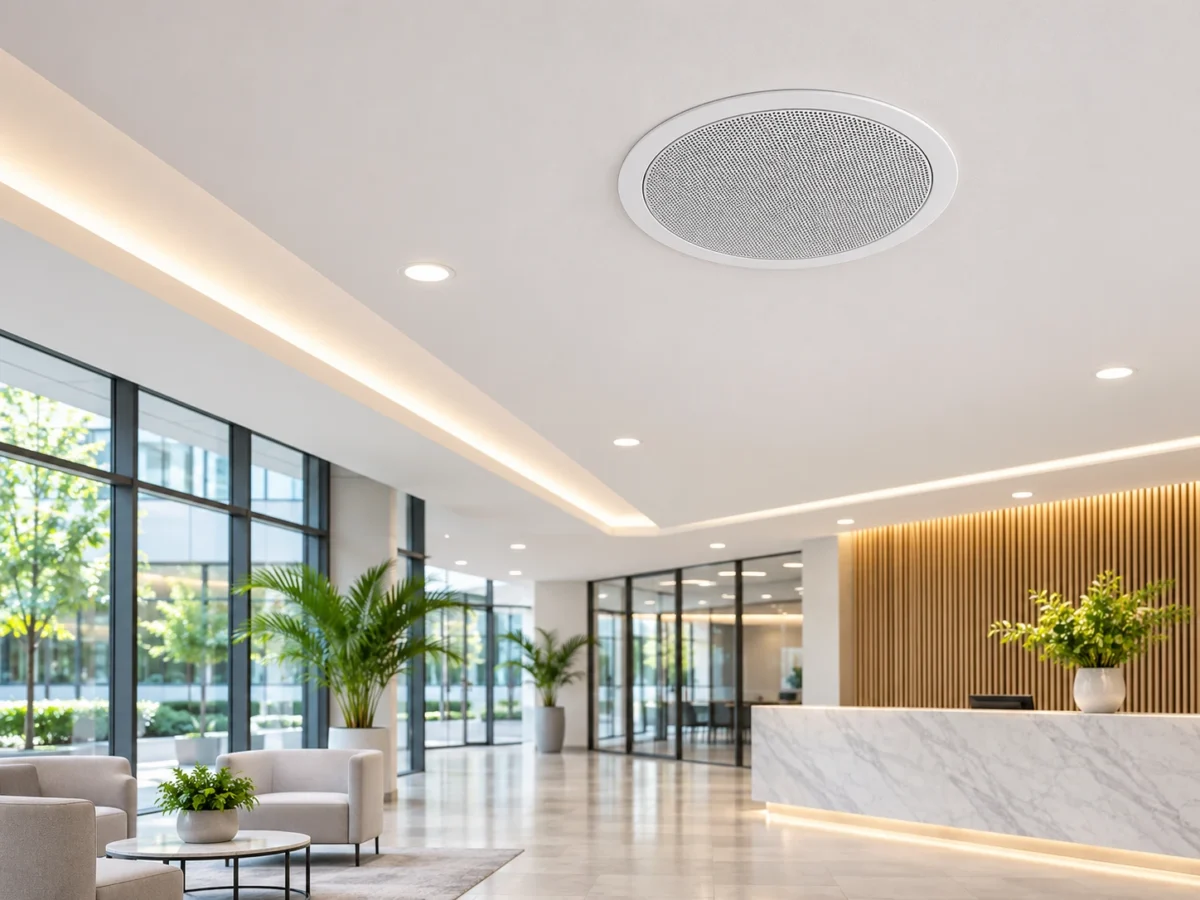
A workspace with a recessed ceiling loudspeaker (illustration)

Routine announcements · crowd management · zoning

Operational PA and space control

Systems for playing announcements to employees, students and visitors; directing crowds, paging specific zones and bells in educational institutions. Depending on the equipment, background music and central management of audio zones can be added. The system is chosen for voice clarity, ease of use and environmental conditions.

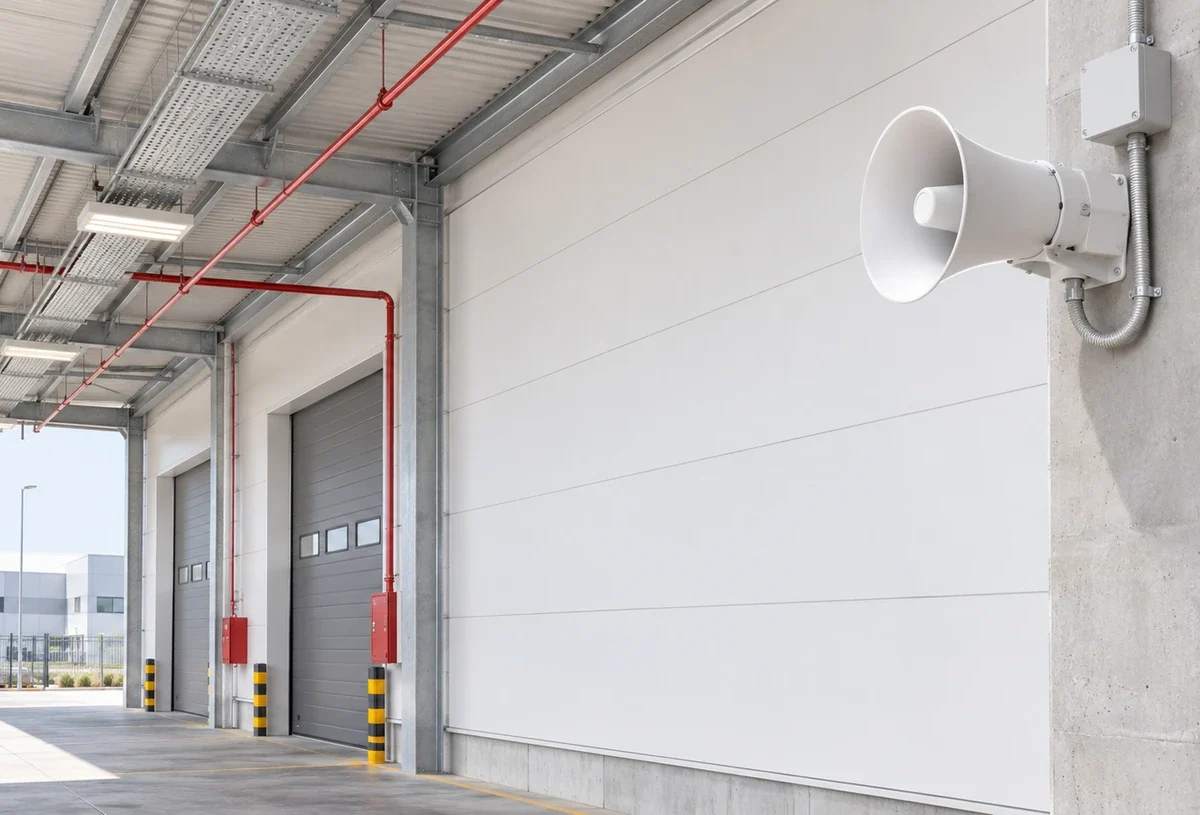
A PA horn speaker in a covered industrial area (illustration)

Alerting and evacuation · safety systems · standards

Emergency PA under SI 1220 Part 3

When an emergency PA system is required, the design addresses clear messages, manual and automatic activation according to the specification, monitoring of components and lines, backup and coordination with fire detection and safety systems. Compliance with the standard and the required approvals is assessed for each project and the approved model; ordinary PA equipment is not a substitute.

Matched to the building and the activity

PA solutions for different spaces.

The choice of equipment and layout depends on the ambient noise, the type of users, listening distances and the operational and safety requirements.

A half-moon loudspeaker mounted on a classroom wall (illustration)

Education and institutions

Classrooms and public buildings

Wall and half-moon loudspeakers, system announcements and bells — according to the layout of the classrooms, corridors and outdoor areas.

A small loudspeaker built into the ceiling of a commercial space (illustration)

Offices and retail

Business and public spaces

Recessed ceiling loudspeakers, independent PA zones and convenient control interfaces for announcements and hospitality.

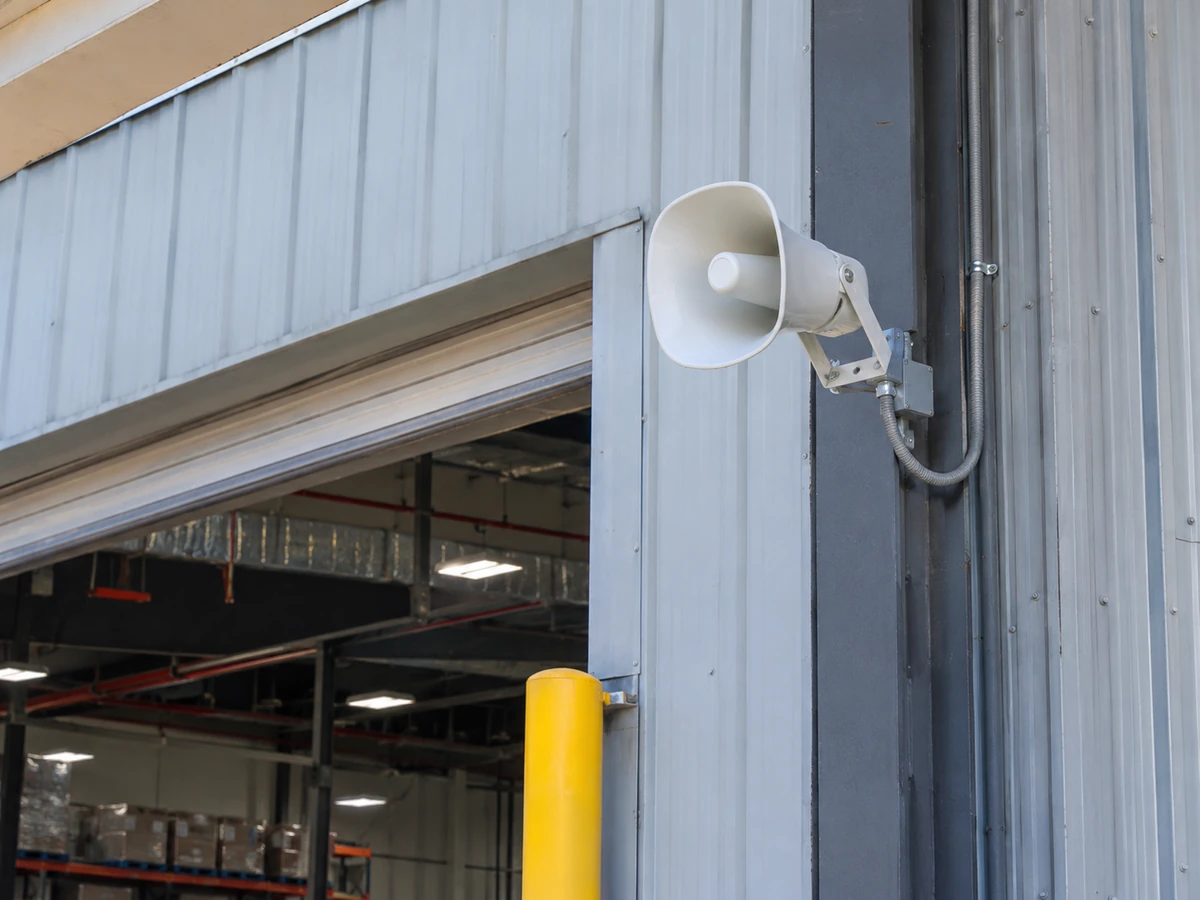
A white PA horn speaker mounted at a warehouse entrance (illustration)

Industry and operations

Factories, warehouses and outdoor areas

Horn speakers and loudspeakers suited to large areas, listening distances and significant background noise.

How we work

An orderly project from design to handover.

Each stage connects to the next — to keep design, execution and control clear throughout the project.

  1. Survey and specification

    Understanding the type of facility, everyday and emergency uses, zones, background noise and interfaces.

  2. Design and system selection

    Choosing technology, loudspeakers, amplifiers, paging stations and separating standard requirements where needed.

  3. Execution and infrastructure

    Laying the audio and control lines, installing the amplification equipment and loudspeakers according to the design.

  4. Tuning and testing

    Checking volume and clarity, zoning, monitoring and emergency scenarios as required.

  5. Handover and support

    Training users, handing over documentation and providing service, maintenance or expansion as needed.

Professional and safety precision

Emergency PA systems are assessed separately.

SI 1220 Part 3 and the requirements relevant to the project deal, among other things, with the installation and interfaces of associated safety systems. When emergency PA is required, we’ll check the suitability of the model, the system components, the integration, the backup power and the tests required for the building.

We mainly install Telefire PA systems, alongside other solutions as needed. Not every loudspeaker or amplification system is automatically suitable for use as part of an approved emergency system.

A separate page on the site presents our emergency PA inspection and maintenance service; here we also focus on designing and setting up the system.

How to design a PA system that is really heard

A good PA system is measured by one thing: whether the message is heard and understood everywhere it needs to be. In a quiet office, correctly distributed ceiling loudspeakers are enough; in a noisy factory or warehouse you need horn speakers and powerful loudspeakers, and in long corridors — division into zones so the message doesn’t echo.

PA systems for schools, factories and businesses

Schools use PA for bells, general announcements and announcements to a specific classroom; factories — for operational announcements and paging employees; businesses and shopping centers — also for background music. For each use we plan the zones, the paging stations and the amplifier power.

Operational PA and emergency PA

Emergency PA is a safety system in every sense: it is connected to the fire detection system, must work during a power cut and is tested under SI 1220 Part 3. That’s why designing emergency PA differs from designing everyday PA, and in many cases the systems need to be separated. For inspection and maintenance of existing systems — see emergency PA. We install PA systems in the North — from Netanya and Hadera, through Haifa, Afula and Nof HaGalil, to Kiryat Shmona and the Golan Heights.


Frequently asked questions

Frequently asked questions about PA systems

What is the difference between an ordinary PA system and an emergency PA system?

Operational PA is used for announcements, directions and everyday use. Emergency PA is sometimes required to meet dedicated design, equipment, monitoring, interface and standard requirements. Suitability is assessed according to the building and the applicable requirements.

Can announcements be made in a specific area of the building only?

Yes. A system can be designed in which users activate one zone, several zones or the whole building, depending on the chosen system.

Can background music be played too?

In suitable systems, background music and operational PA can be combined with priority given to announcements. In an emergency system, suitability is assessed separately against the specification and standards.

Which type of loudspeaker suits a noisy factory or warehouse?

Usually we consider horn speakers or loudspeakers with suitable dispersion and power, along with correct positioning and taking background noise levels into account. The decision is made after a survey and design.

Can you install a Telefire system?

Yes. We work mainly with Telefire systems and equipment, as well as other manufacturers when it suits the specification and the customer’s needs.

Can an existing PA system be upgraded?

Sometimes, yes. We’ll check the condition of the amplifiers, loudspeakers, infrastructure and control interfaces to see which parts can be kept and what needs replacing.

Does emergency PA have to be connected to a fire detection system?

The requirement for an automatic interface and activation scenarios derives from the building’s specification and the safety requirements that apply to it. It is checked as part of specifying the emergency PA system.

How long does it take to install a PA system?

It depends on the size of the building, the number of zones and the existing infrastructure. After a site visit we can give an orderly estimate of the work schedule.

Which areas do you install PA systems in?

Across the North — from Netanya and Hadera, through Haifa, Afula and Nof HaGalil, to Kiryat Shmona and the Golan Heights.

Need a PA system that suits your building?

Tell us whether it's operational PA or an emergency system, the size of the building and the number of audio zones — and we'll match the design and equipment to the need.

Contact us on WhatsApp →
WhatsApp