03 / Automation · Scenarios · Interfaces

Security and Safety System Integration
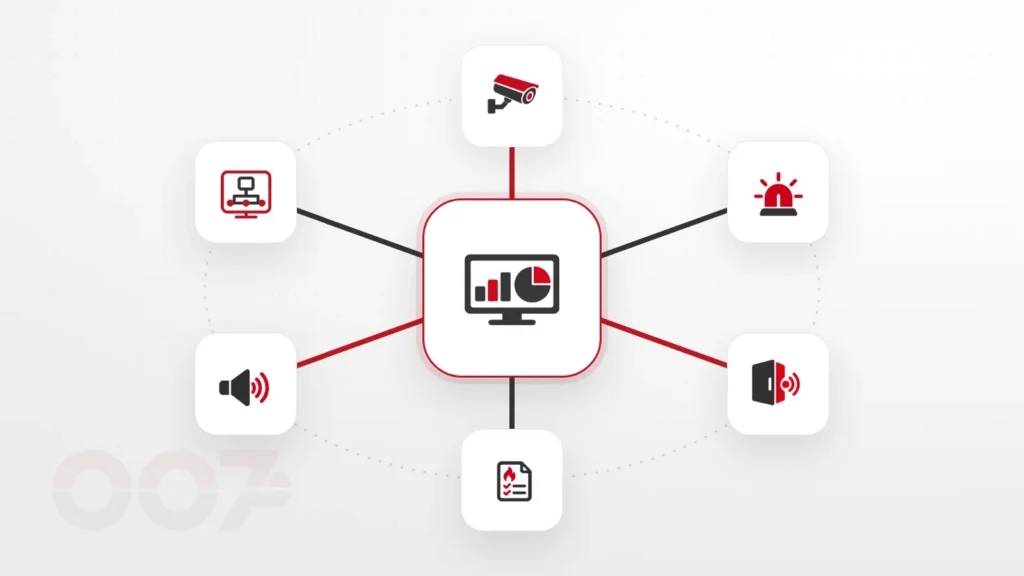
Integration between safety, security and operations systems — so that an event in one system triggers a coordinated response in the others, and the overall picture is gathered in one place.
Services in this area
Separate systems. One process.
Each service describes a scenario: what happens in an event, which systems respond and how we check that it really works.





Fire Detection + Access Control
Automatic door release and opening of passages during a fire detection event.
To the service page →Alarm + Cameras
Linking each alarm zone to the camera that covers it, for instant viewing and recording of the event.
To the service page →PA + Safety Systems
Triggering automatic evacuation messages from the fire detection system, by zone.
To the service page →Central Management System
Bringing cameras, alarm, access control and fire detection together in one management interface.
To the service page →Integration Test Preparation
What is connected to the fire detection panel, and how to prepare the building for an integration test under Commissioner's Directive 536.
To the service page →Planning an Activation Regime Table
A guide for the safety designer: what is needed to prepare an activation regime table, and how it moves from the plan to the test.
To the service page →How we work
From mapping the systems to testing the full scenario.
-
Mapping
Which systems exist and what their interfaces are.
-
Scenarios
Defining the desired action for each event.
-
Integration
Connecting, programming and configuring the interfaces.
-
Testing
Testing scenarios and documenting the result.
What system integration is, and why it is tested separately
Integration between security and safety systems is the way one system triggers the others: the fire detection system detects smoke, and in response doors on the escape routes are released, an evacuation message is played over the PA system and other systems operate in a predefined order. The Fire and Rescue Authority calls this an “activation regime” (cause and effect), and Fire Commissioner’s Directive 536 regulates it in buildings where it is required.
Integration in security too
Not only fire safety: connecting the alarm system to the security cameras lets you see immediately what is happening when a detector is triggered, and a central management system brings the events of all the systems together on one screen — in the control room or remotely.
Design, connection and testing
We map the existing systems in the building, design the interfaces between them, make the connections and run each scenario for real to make sure it works end to end. When an official activation regime test is required, we prepare the systems for it and handle the findings. The service is available to businesses and institutions in the North — from Netanya and Hadera, through Haifa, Afula and Nof HaGalil, to Kiryat Shmona and the Golan Heights.
Do you have several systems that don't talk to each other?
Tell us what you have and what you want to happen during an event.