Private homes · apartments · homes under construction

Home Security Systems

Alarm system, security cameras, intercom and home network: designed together, installed neatly and controlled from your phone.

What we install at home

Five systems, one protected home.

Each system stands on its own, but the real value comes from designing them together: the same infrastructure, the same control from your phone and one contact person.

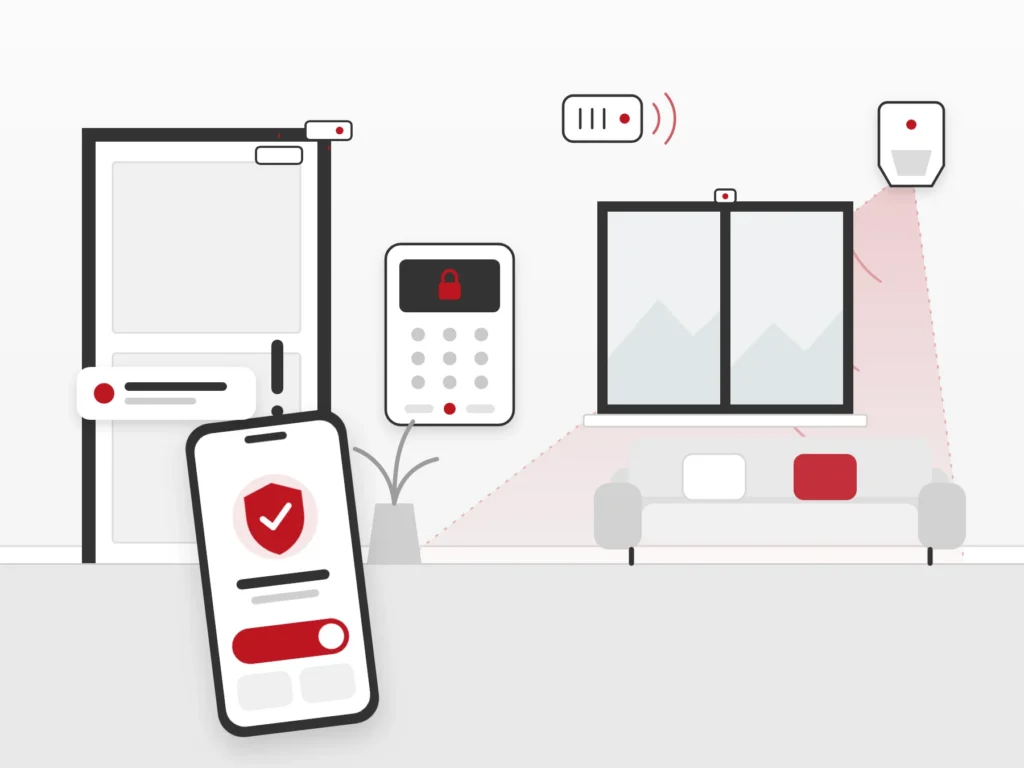
Illustration of a home alarm system: a keypad by the front door, a volumetric detector in the corner of the living room, opening detectors on the door and window, and a phone app

01

Home alarm system

A good home alarm system starts with the family's habits: who is at home and when, which openings face the yard, and whether there are pets. Based on this we choose detectors, divide the home into zones and decide what happens when the system detects a break-in.

  • Volumetric detectors, and opening detectors for doors and windows
  • Partial arming for the night: the perimeter is protected and you move freely inside
  • Detectors suited to a home with pets
  • Phone alert and siren, with the option of connecting to a monitoring center
  • A wireless solution for an existing home, without chasing walls
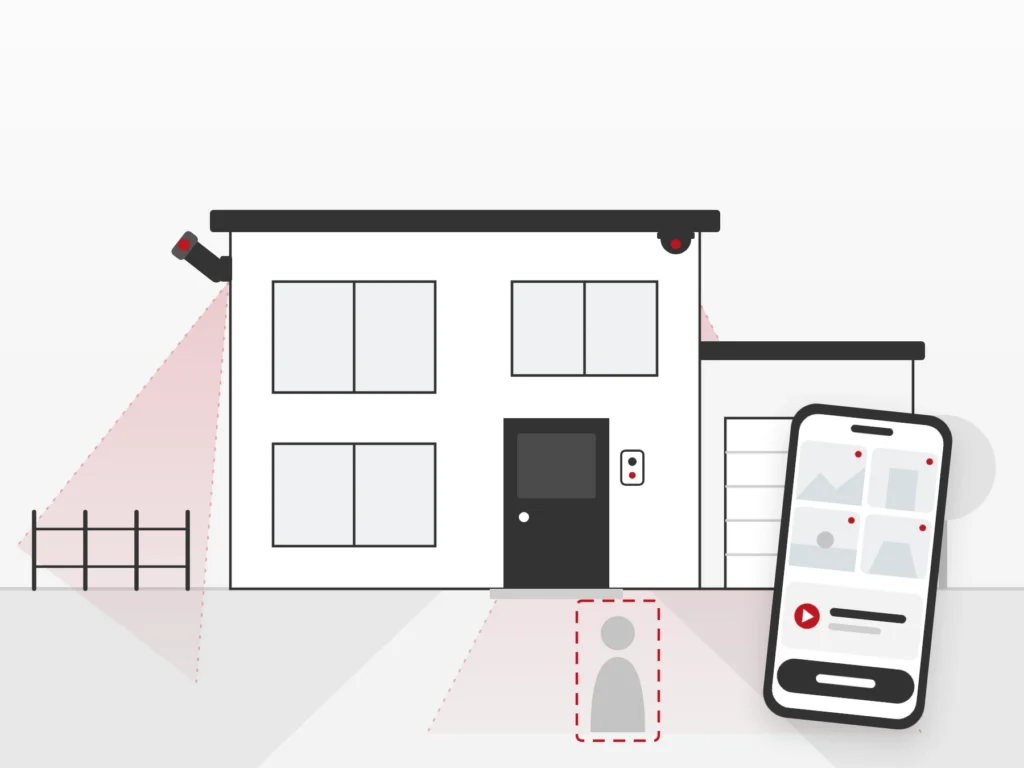
Illustration of a private home with a security camera under the roof covering the entrance path, a camera on the corner of the house covering the gate, and viewing the cameras from the phone

02

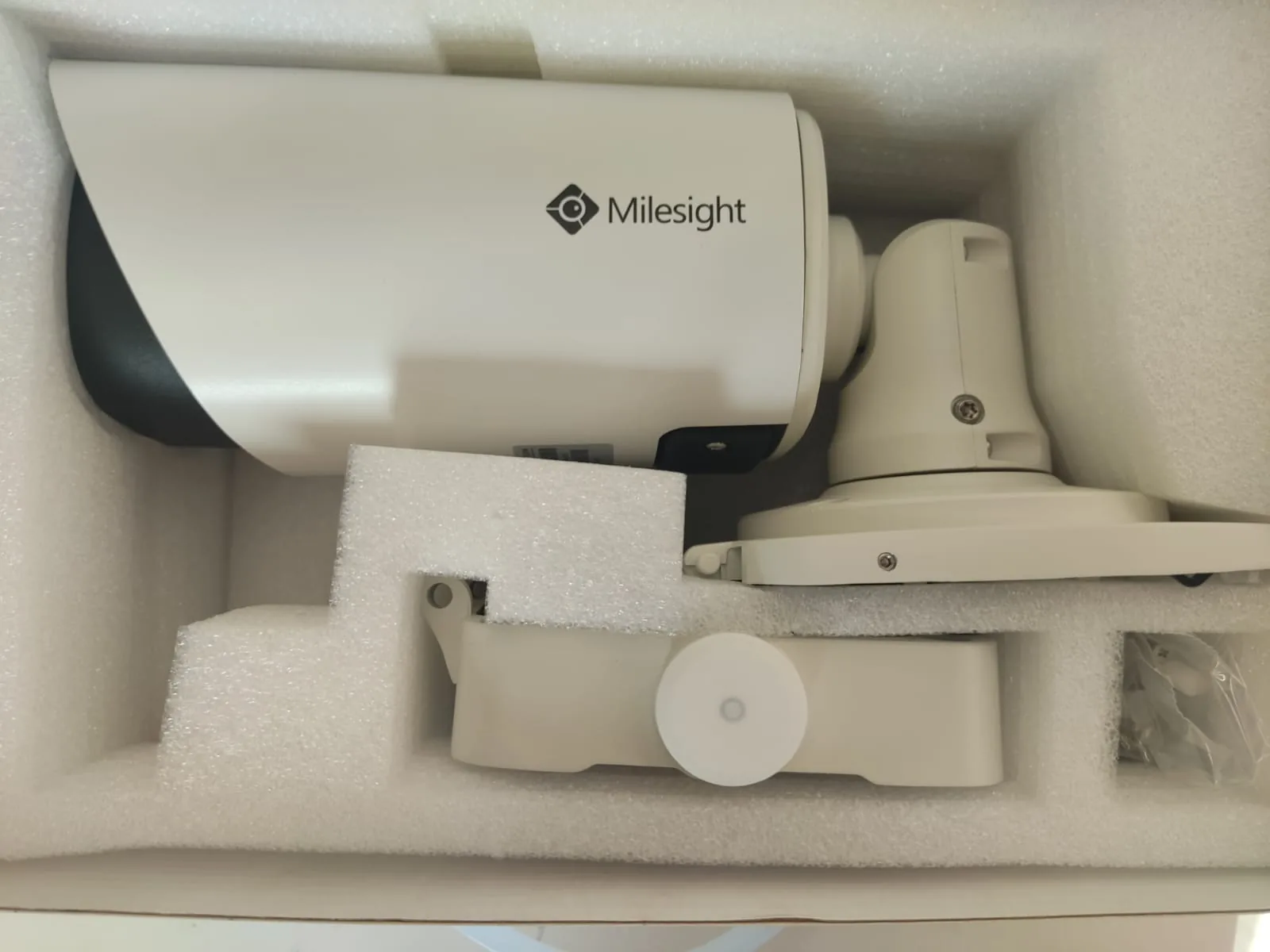
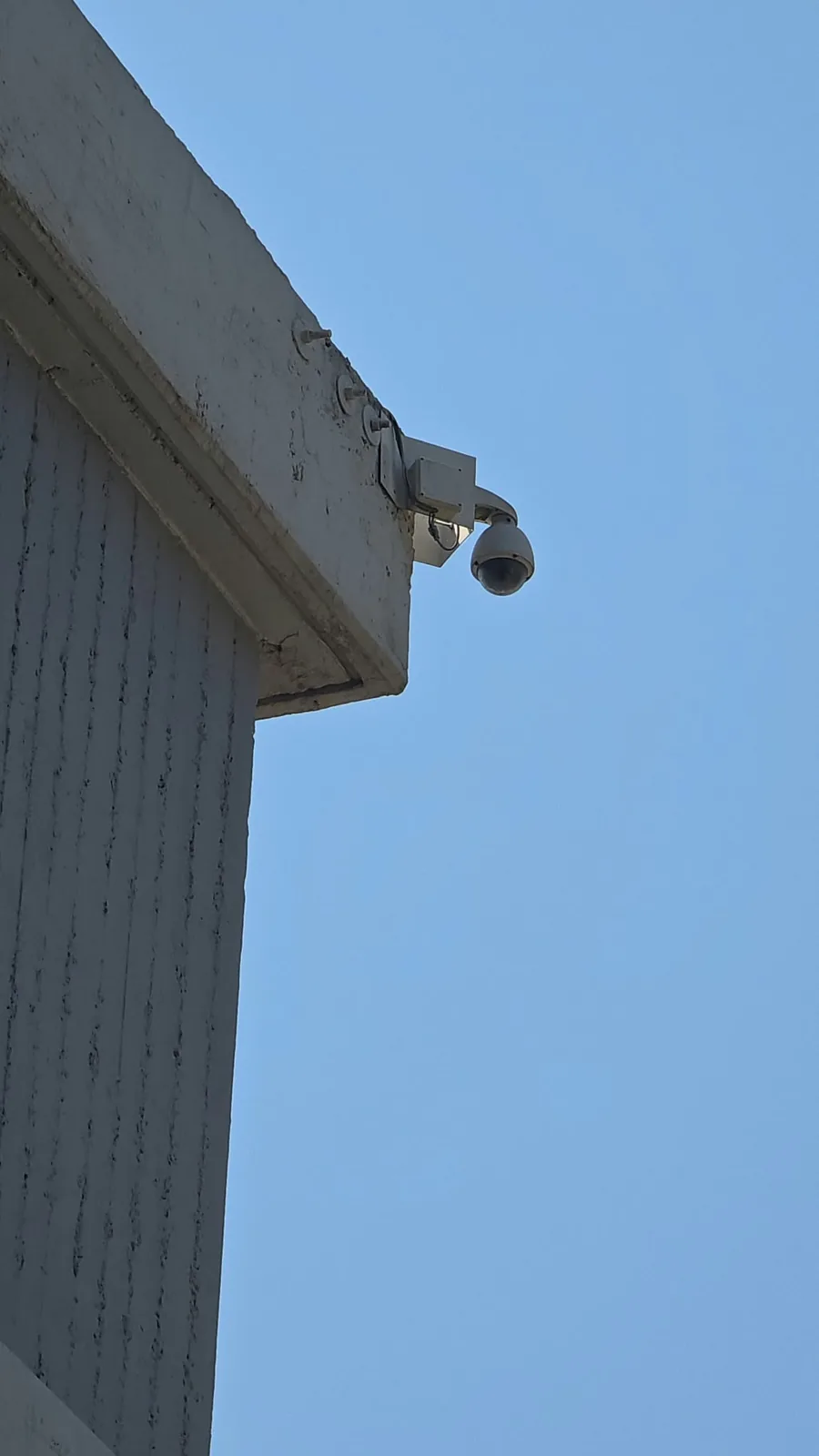
Home security cameras

Home security cameras need to cover what really matters: the entrance, the parking, the yard and the path. We plan viewing angles with no blind spots, choose resolution and night vision that suit the lighting, and protect the privacy of the neighbours and the household.

  • Live view and recordings from your phone, from anywhere
  • Night vision and person or vehicle detection, to reduce false alerts
  • Local recording on a recorder (NVR), without depending on the cloud
  • Concealed wiring and discreet placement that blends into the front of the house
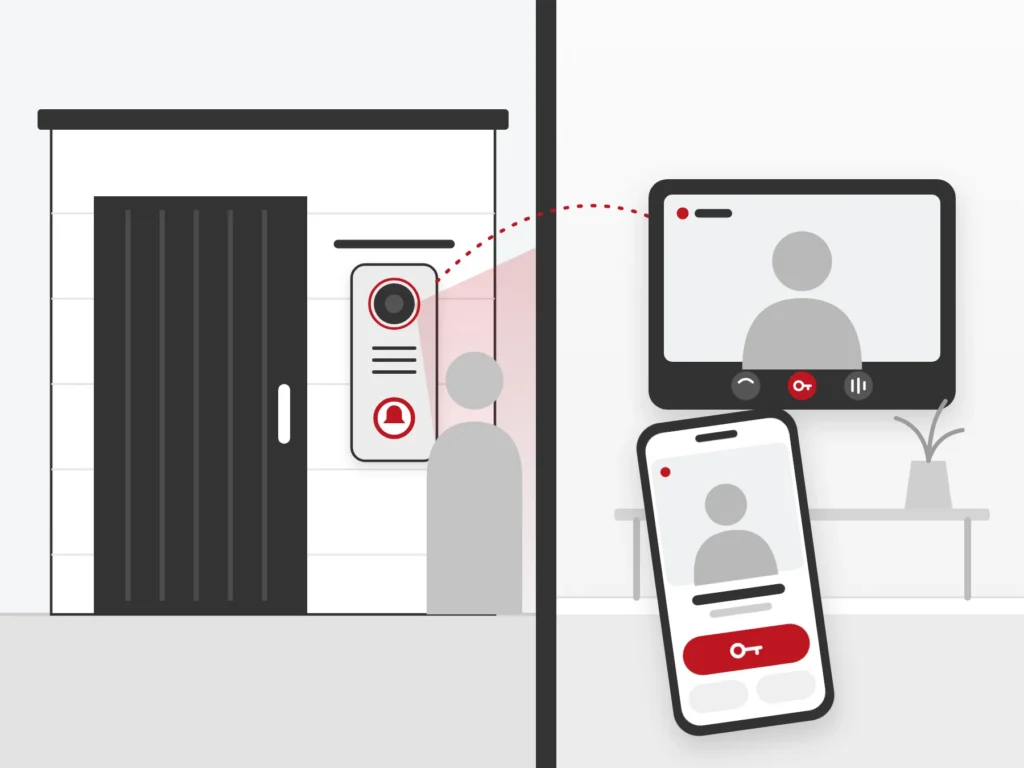
Illustration of an intercom with a camera by the house gate, a visitor standing in front of it, and a screen inside the house and a phone showing the visitor with an open button

03

Home intercom

An intercom with a camera lets you see who is at the gate before opening, from the screen at home or from your phone, even when you're not home. In a private home it connects to the electric gate and the front door, and in a building to the system shared by all residents.

  • A screen at home and an app: answer and open from anywhere
  • Opening with a code, a tag or from the phone
  • Connection to an electric gate, a lock and the front door
  • A record of who rang when you weren't home
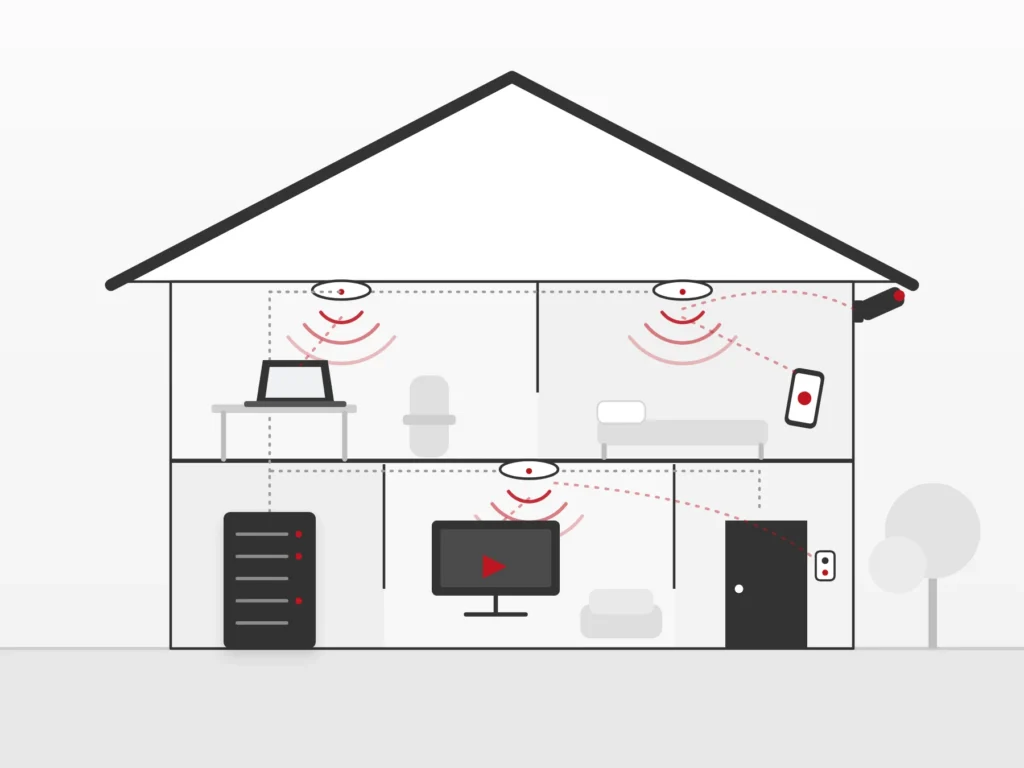
Illustration of a house cross-section with a communication cabinet, wireless access points on every floor, and connections to the TV, computer, phone, camera and intercom

04

Home network and communications

The alarm, cameras and intercom rely on the home network, and so do the TV, working from home and studying. A planned network gives stable reception in every room and in the yard, instead of one router straining from the living room.

  • Wireless access points (Wi‑Fi) covering every floor, including the yard and balcony
  • Network wiring to fixed points: TV, workstation and cameras
  • A tidy, labelled communication cabinet
  • A separate network for guests and smart devices
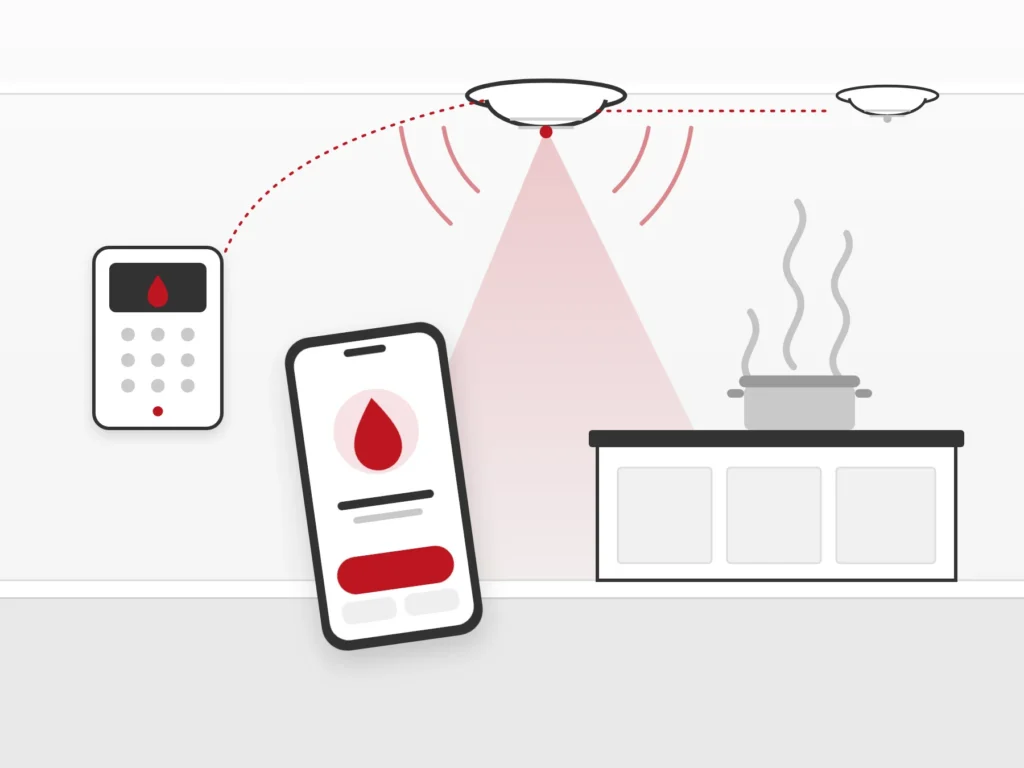
Illustration: A smoke detector on a kitchen ceiling detects smoke from a pot and alerts the alarm panel and the phone

05

Home smoke detectors

A fire at home is especially dangerous when no one notices it: at night, in the kitchen or next to a charger. A smoke detector wakes the house in time. There are two types: a standalone detector, which runs on a battery and sounds by itself, and a detector that connects to the alarm system and also alerts your phone and the monitoring center.

  • Standalone detector under SI 1220 Part 5: quick installation, no wiring
  • Detector connected to the alarm: alerts to your phone and the monitoring center even when no one is home
  • Correct placement: near the bedrooms, in the hallway and on every floor
  • Heat detector for the kitchen, to prevent false alarms from cooking
  • Testing and battery replacement as part of the alarm system service

How we work

From the first visit until everything works on your phone.

  1. Visit and specification

    We go over the home, the openings and your habits together, and understand what matters to you.

  2. Proposal and design

    A clear proposal: which systems, where each component goes, and what the schedule is.

  3. Clean installation

    Concealed wiring as far as possible, tidy work and care for your home.

  4. Training and service

    We set up the phones of everyone in the household, and stay available afterwards too.

Before and after

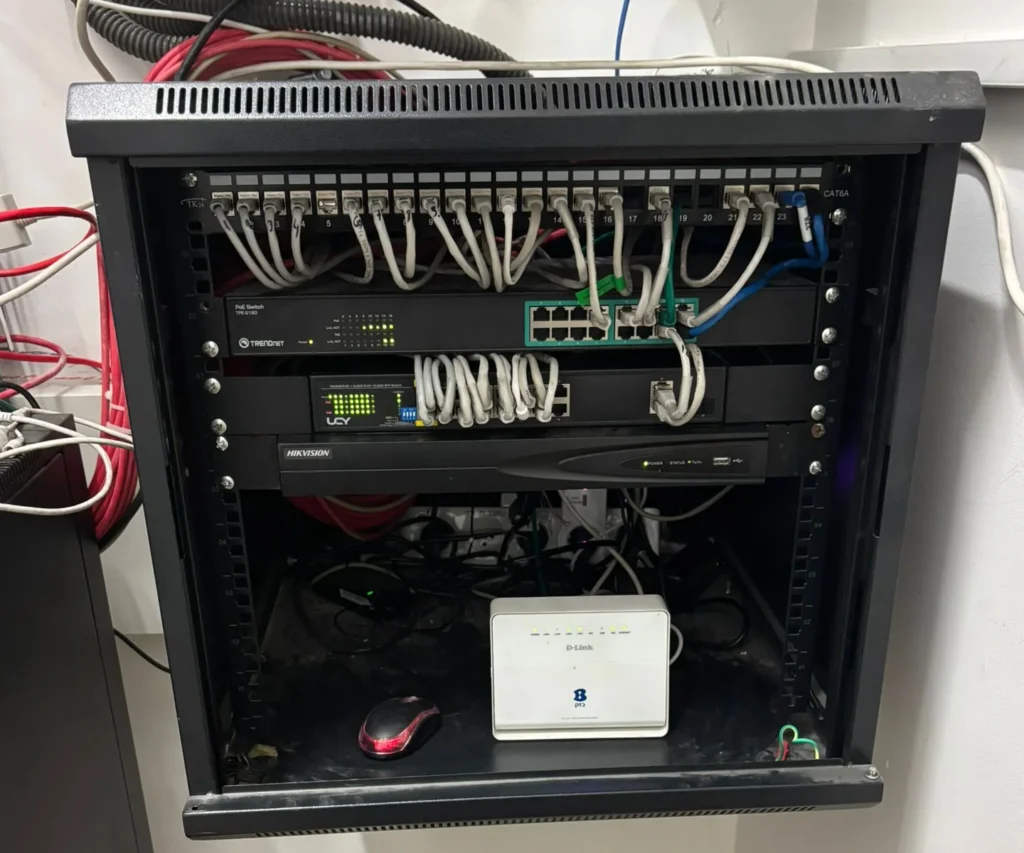
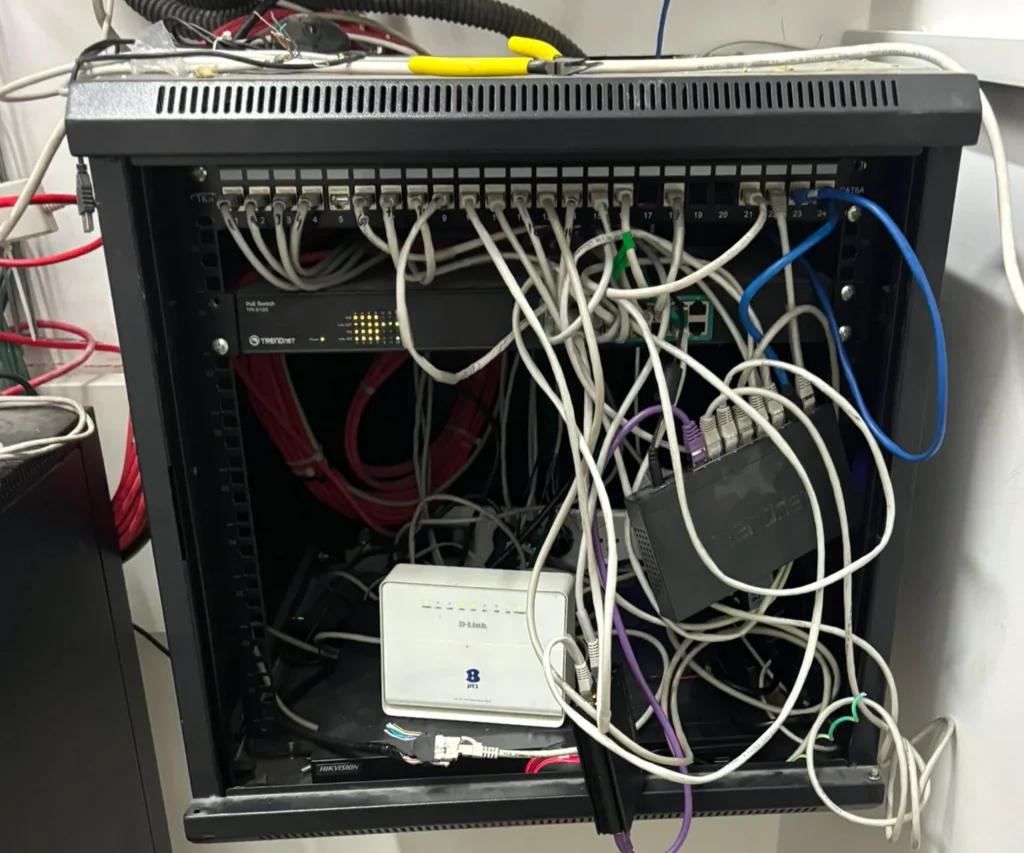
Communication cabinet: before and after.

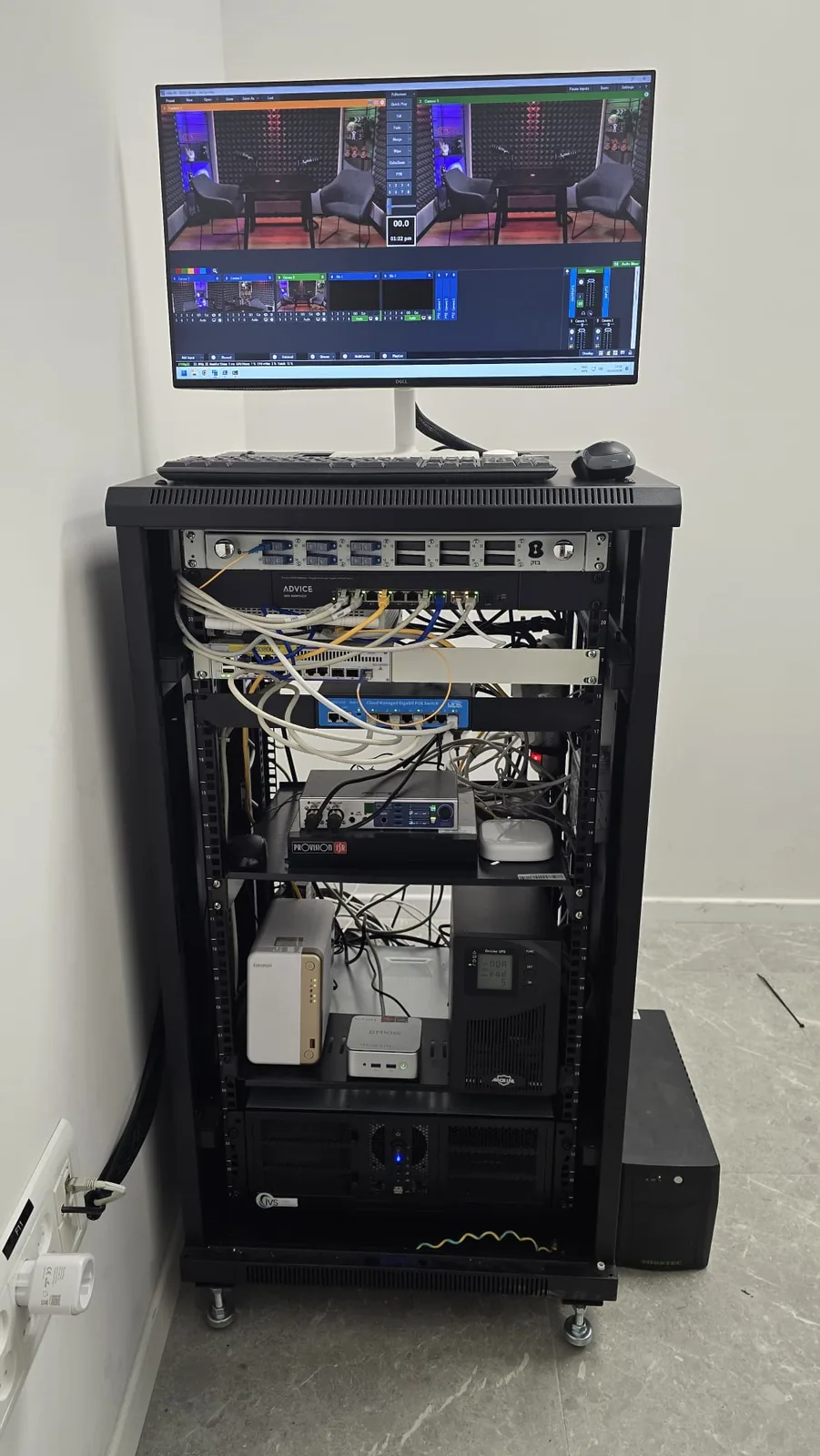
Tangled cables make finding a fault and every addition difficult. This is what a cabinet we tidied looks like: short, labelled cables and the equipment fixed in place. We bring the same order to the communication cabinet at home.

Drag the line to compare

The same communication cabinet after tidying: short, neat patch cables, switches and a recorder mounted on rails
A wall-hung communication cabinet with tangled cables coming out of it and a switch hanging on the cables
Before After

How to choose home security systems

Start from the home, not the catalogue

Home security systems are chosen according to the home and the people who live in it. A detached house with a yard needs perimeter coverage and outdoor cameras; in an apartment the focus is on the front door, the balcony and the intercom. That’s why we start with a visit: we go over the openings, the daily routine and what worries you, and only then choose equipment.

A home under construction or an existing home

In a home under construction or renovation it’s worth planning the infrastructure at the electrical stage: conduits and points for cameras, intercom, detectors and the network. This is much cheaper and cleaner than adding them after plastering. In an existing home we use wireless components and existing cable routes, so in most cases there is no need to chase walls.

One system instead of four apps

When the alarm system, cameras and intercom are designed together, they also work together: the camera shows what triggered the alarm, and the intercom opens the gate from your phone. As far as the equipment allows, we bring the control into one place, so everyone in the household can use the system without getting confused.

And what about privacy

Home cameras are aimed at your own space: the entrance, the parking and the yard, not the neighbours’ windows. The recordings are kept with you, phone access is password-protected, and you decide which members of the household see what.


An alarm system with a keypad, a blue display showing 007 and a phone app

Frequently asked questions

What people ask us before a home installation

Can security systems be installed in an existing home without breaking walls?

Yes. In an existing home we mainly use wireless components and existing cable routes, so in most cases there is no need to chase walls. In a home under construction or renovation it's better to prepare wired infrastructure in advance.

We're building a house. When should we involve you?

Already at the electrical planning stage, before the walls are closed. That way conduits and points for cameras, intercom, alarm and network can be prepared, saving work and costs later.

Can all the systems be controlled from the phone?

Yes. Arming and disarming the alarm, viewing the cameras and answering the intercom are done from the phone. As far as the equipment allows, we bring the control into one app.

We have a dog. Won't the alarm go off all the time?

There are detectors suited to a home with pets, and together with correct detector placement and partial arming, false alerts can be greatly reduced. No solution guarantees zero false alerts, so we match the system to the home and test it after installation.

What happens in a power cut or when the internet goes down?

The alarm system has a backup battery, and the recorder keeps saving footage locally even without internet. A UPS can be added for critical points.

Which areas do you install in?

Across Northern Israel, from Netanya to the Golan Heights.

What is the difference between a standalone smoke detector and one connected to the alarm?

A standalone detector runs on a battery and sounds an alarm by itself, so it only helps when someone at home hears it. A detector connected to the alarm system also triggers the siren, sends an alert to your phone and can report to the monitoring center — even when the house is empty.

Want to feel safe at home?

Send us a message with the type of home and what matters to you, and we'll schedule a visit for specification.

Contact us on WhatsApp →
WhatsApp