
Hospitals and inpatient clinics
Accessible calls from the patient's position
A button by the bed, a call from the bathroom and indication at the room door — according to the ward layout and work processes.
Control Systems / Patient-to-staff communication
A nurse call system that lets a patient or resident summon staff, and routes the call to where it is handled — matched to the building, the number of rooms and the work routine.
An end-to-end solution
Accessible call units, including buttons and movable cords, according to the patients' needs and the room design.
Pull cords and dedicated units for places where an available call device is needed even without access to the bed.
Room controllers, reset and presence, according to the system model and the ward's operating requirements.
Clear visual indication of calls in corridors and at room entrances, according to the site layout.
Displaying and managing calls at the station; in suitable systems call sources can be distinguished and operational data produced.
Installing infrastructure, connecting end devices, testing call scenarios, handover and service for an existing system.
A response tailored to the nature of the institution
The system's look and operation need to suit the people who use it, not just the list of components.
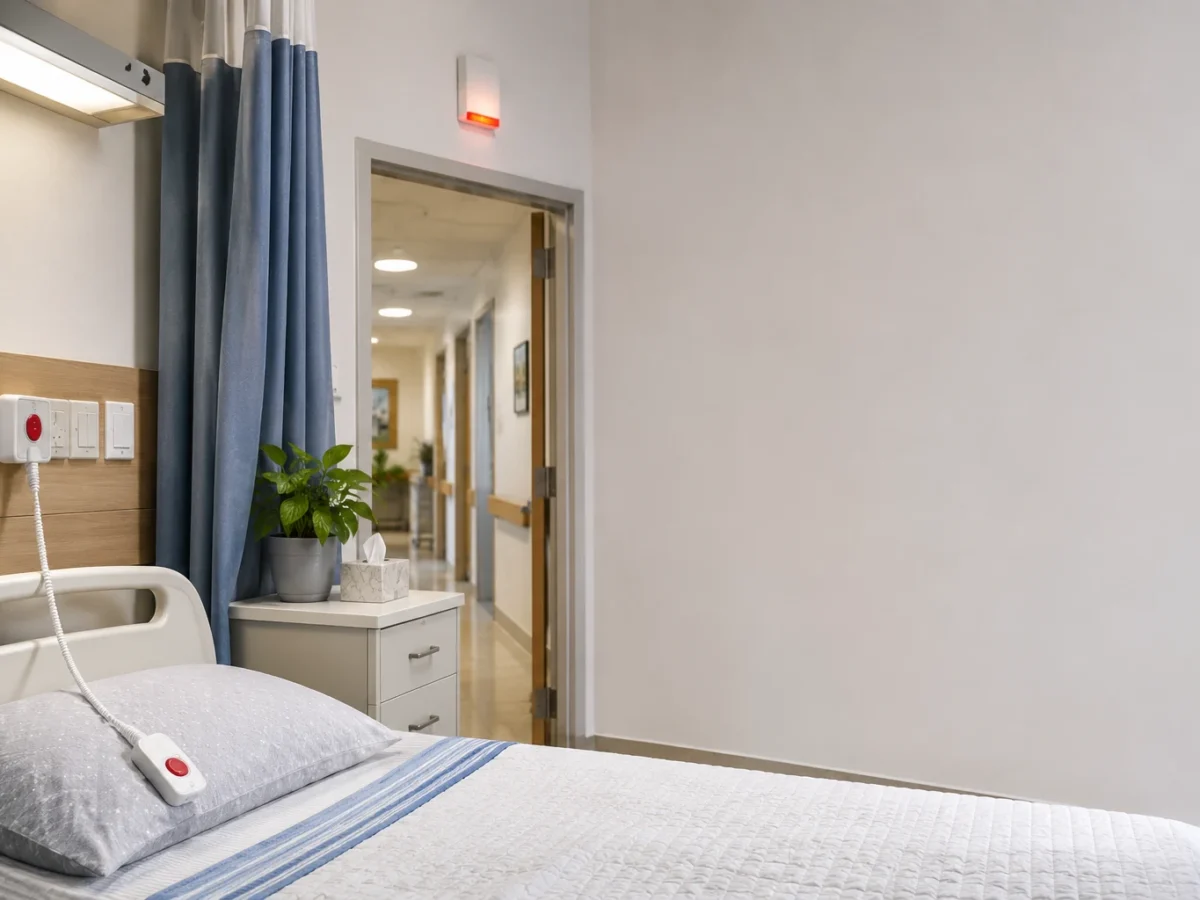
Hospitals and inpatient clinics
A button by the bed, a call from the bathroom and indication at the room door — according to the ward layout and work processes.
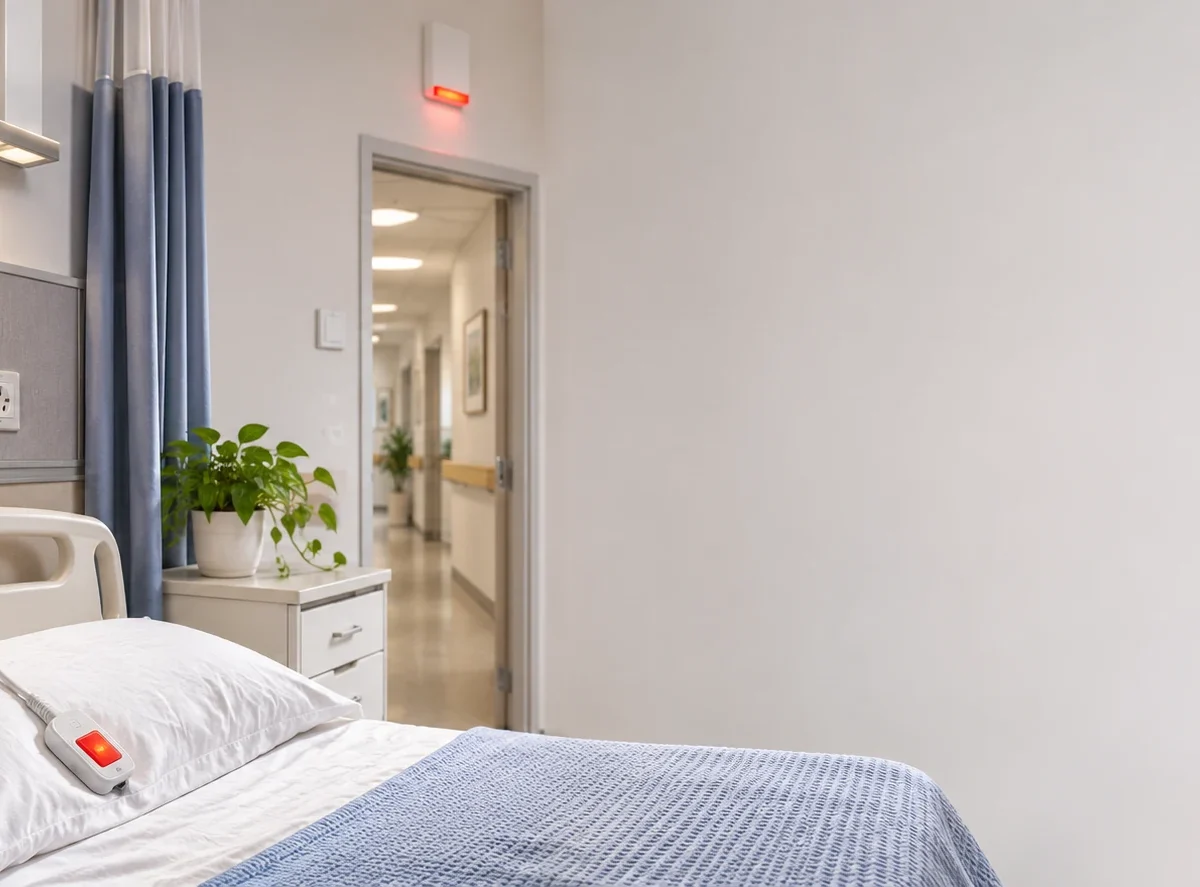
Nursing homes and assisted living
Matching the number of rooms, the type of residents and the division into areas, with an emphasis on simple, convenient use and orderly maintenance.
How we work
Each stage connects to the next — to keep design, execution and control clear throughout the project.
Specifying the wards, the number of rooms, the staff stations and the call response processes.
Choosing panels, room units, end devices and displays according to the suitable model and the institution's requirements.
Laying the cabling, installing buttons, indicator lights and room units, and connecting the central system.
Testing calls from the bed and the bathroom, indication and reset/presence actions according to the system configuration.
Training users, handing over operating information and handling maintenance and future expansions.
Technology tailored to the institution
We work mainly with Shavit systems by Noah Systems. The manufacturer’s range includes call units, indication and control devices, and different solutions according to the size of the institution.
According to the manufacturer’s publications, Shavit IP can display the source of a call, such as a bed or a bathroom, and show the calls at the nurses’ station. The Shavit 2024 LITE model includes a touchscreen and supports up to 56 rooms. Two-way audio, reports and alerts from medical equipment depend on the model, the equipment and the project configuration.
Choosing a system requires checking the institution’s requirements, the manufacturer’s specification and the standards or approvals that apply to that installation. The images on this page are illustrations only and are not photos of Shavit models or of projects we carried out.
A nurse call system is the basic communication channel between the patient and the staff. In a nursing institution or an inpatient ward it must work at all hours, be accessible even to those who have difficulty moving, and immediately show the staff which room and which bed the call came from.
In nursing homes and assisted living we plan buttons by the bed, in the toilet and in the shower, and sometimes portable panic buttons too. In hospitals we add two-way audio, indication above the room door and a display at the nurses’ station. In every case the system is matched to the room layout and the actual call-handling process.
We work mainly with Shavit solutions, and carry out installation in new buildings, upgrades of existing systems and ongoing maintenance. A nurse call system can also be connected to a central management system. The service is available to institutions in the North — from Netanya and Hadera, through Haifa, Afula and Nof HaGalil, to Kiryat Shmona and the Golan Heights.
Photos
Illustrative images: renderings of detectors and systems in home and work environments.
Frequently asked questions
Yes. We look at the size of the institution, the type of residents, the number of rooms, the division into areas and the way calls are received in order to match the system configuration.
Yes. Shavit systems have dedicated call devices, including pull-cord units. The location and type of device will be determined according to the conditions of the place and the accessibility and safety requirements.
These are different solutions in the Shavit family. According to the manufacturer, IP offers display of the call source and management at the station, while LITE is a compact configuration with a touchscreen and up to 56 rooms. The exact fit is determined according to the project’s requirements.
Some configurations offer two-way audio. It is not an automatic feature of every model, so the model and accessories need to be checked in the quote.
Sometimes part of the infrastructure and devices can be kept. We’ll assess the condition of the system, compatibility with the new components and the reliability and operating requirements.
In suitable Shavit solutions the room and call source can be displayed at the staff station, according to the system installed and its configuration.
Yes. We carry out testing, fault handling and maintenance of nurse call systems according to the type of equipment and the condition of the site.
Yes. We plan the work by wing and at hours that suit the institution, to minimize disruption to patients and staff.
Across the North — from Netanya and Hadera, through Haifa, Afula and Nof HaGalil, to Kiryat Shmona and the Golan Heights.
Tell us about the type of institution, the number of rooms and the existing system — and we'll help choose a suitable solution.